
Ernest Hüpeden's Murals
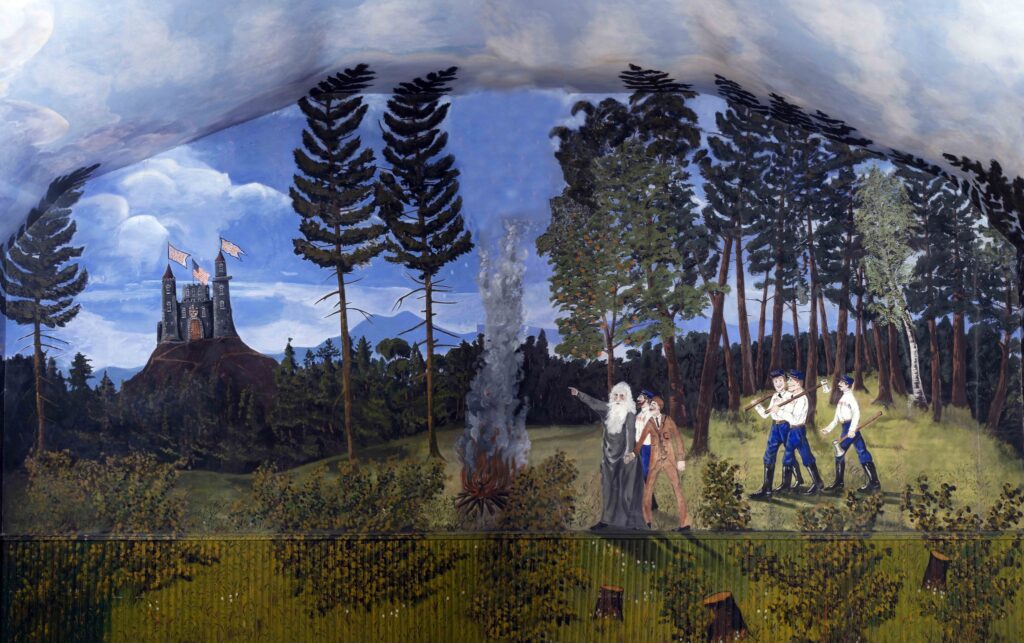
At the turn of the twentieth century, German immigrant artist Ernest Hüpeden quietly gave Valton’s MWA Camp 6190 Hall its lasting visual identity—though it wouldn’t be called the Painted Forest for another 60 years, when Delores Nash gave it the name we still use today.
After painting the stage curtain and window shades to the delight of Charles Gibault and the founding members of Modern Woodmen of America Camp 6190, Ernest Hüpeden was invited to take on the painting the interior of the hall itself. Between 1899 and 1901, Hüpeden covered the walls and ceiling with murals that told the story of why insurance mattered and what belonging to a fraternal organization could offer its members.
The murals don’t show the step-by-step initiation ceremony. Instead, they form the backdrop for it. They set the mood, reinforce the meaning behind the ritual, and—like the stage curtain—reflect current events while offering intriguing clues about Hüpeden’s own life and experiences.
The hall is oriented along the cardinal directions, with the stage on the south wall. From there, the murals unfold around the room. Along the west wall, scenes reflect the challenges and dangers faced by an initiate. As the story moves north, those dangers give way to stability and protection, culminating with the welcoming of the new member to the fraternity on the north wall.
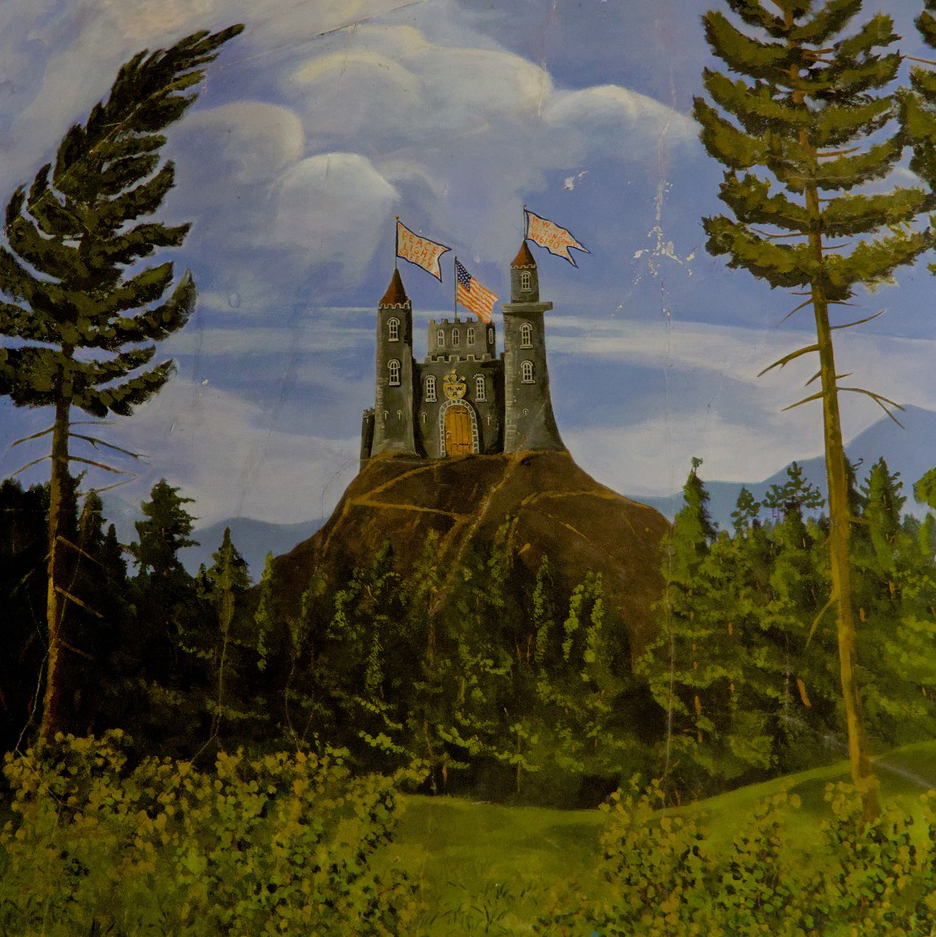
One clue to Hüpeden’s life appears in the castle painted on the north wall. Having emigrated from Prussian-controlled Germany, Hüpeden likely included this image as a quiet tribute to his birthplace. The Bavarian-styled Castle flies a flag reading “Peace, Light, Safety,” alongside a second flag for MWA Camp 6190, tying his personal history to his short sojourn in Valton.
Tagged blog