
The Women of Ernest Hüpeden’s Painted Forest
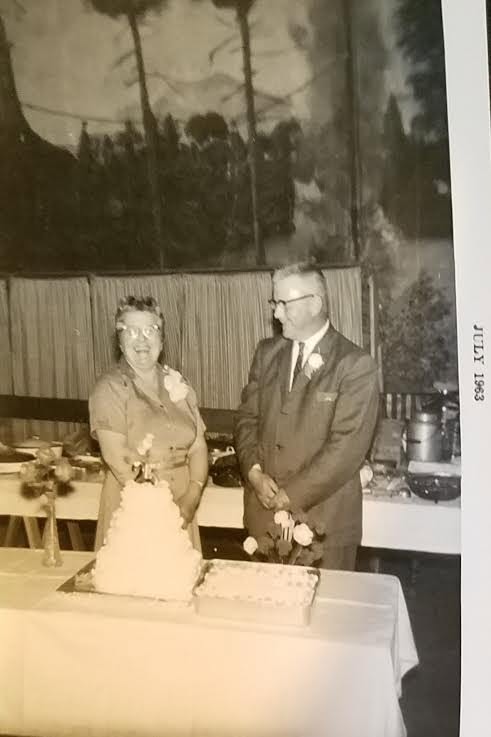
There are two women who were vitally important to the Ernest Hupeden’s Painted Forest. It is safe to say that without Norma Gibeaut Mortimer and Dolores Nash, we would not have the Ernest Hupeden’s Painted Forest.

Salomania Reigns!
One of the remarkable things about Ernest Hüpeden is how clearly the world around him appears in his art. His current events, now our history, are embedded in his artwork. At the Ernest Hüpeden’s Painted Forest, his 1898 curtain painting of the 1896 Battle of Manila, is one such example.
Glimpse of the Man behind the Murals…
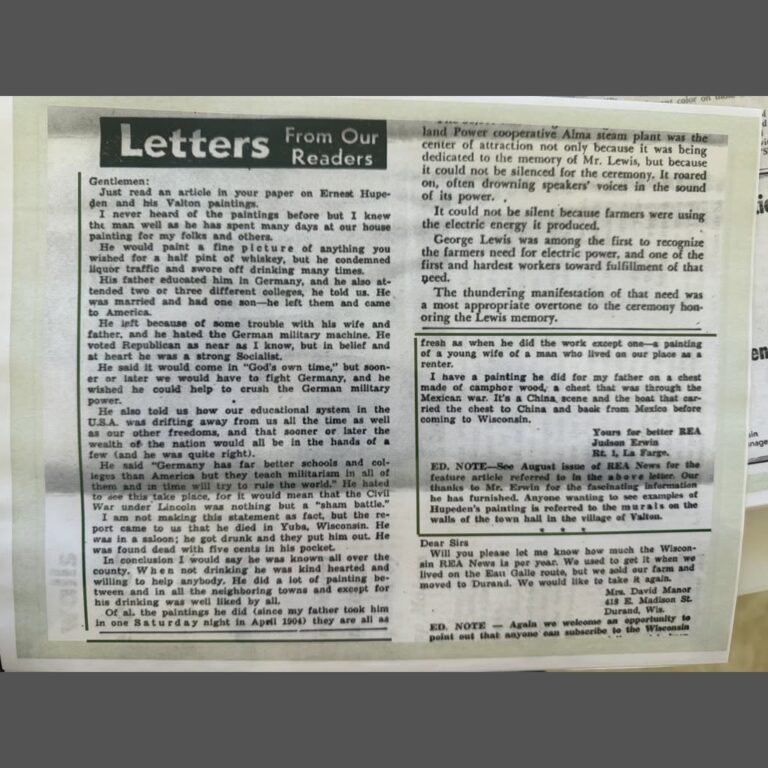
The 1957 letter to the REA Editor remembering conversations from 1904 with Ernest Hupeden is fascinating! These sort of memories give us insight into the man behind the murals. He was intelligent, educated, generous as well as a folk artist. And many of his predictions have come true.
What in the world is an “Artist-built environment”?
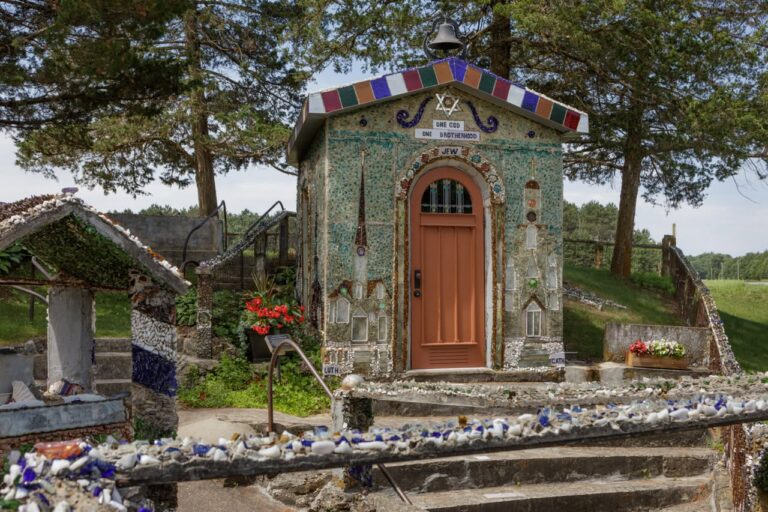
“Artist-built environment” is a fancy term for a really cool place.
These places are building interiors or outside spaces such as backyards, farm fields, or gardens transformed by an artist. In most cases, art environments were created by self-taught artists. The result is not just “some thing”, “a piece of art”, that you look at — it is a place you step into, the art surrounds you – you breathe a little differently, see a little differently, experience a little differently in art environments.
What’s in Your Drawers?
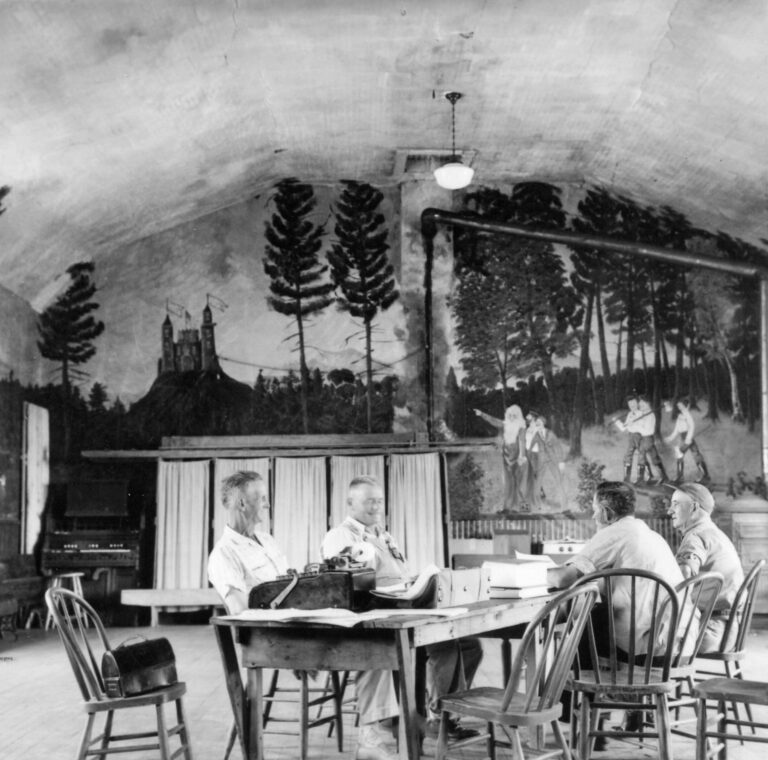
After the cessation of activities in 1928 by the MWA at Camp 6190 Hall, the Hall became the Community Gathering Point protected from vandalism by love.
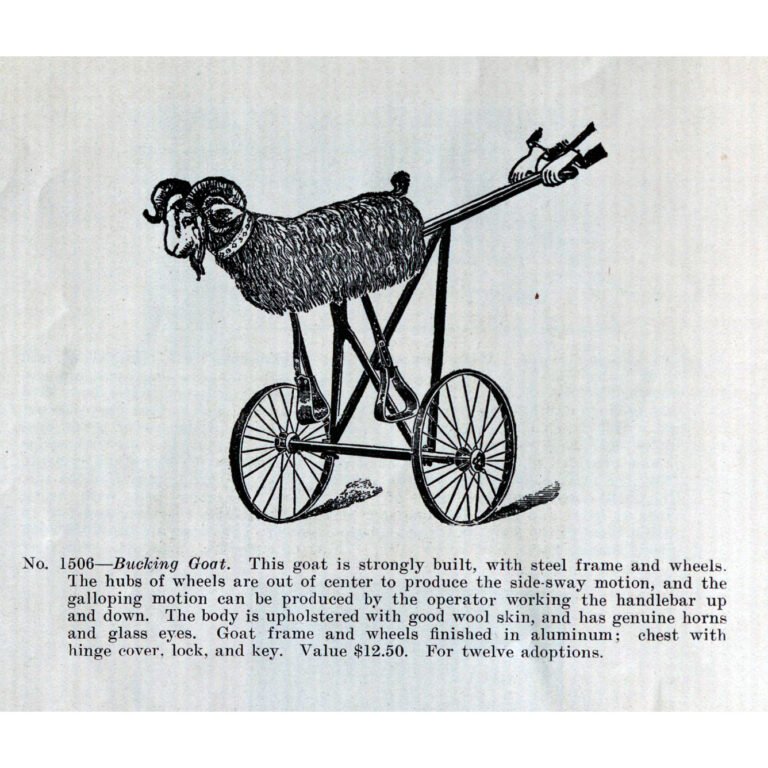
The Goat Story
In the 1800s, fraternal organizations were often viewed with suspicion. Their closed meetings, passwords, and initiation ceremonies led outsiders to imagine something dark and dangerous happening behind lodge doors.
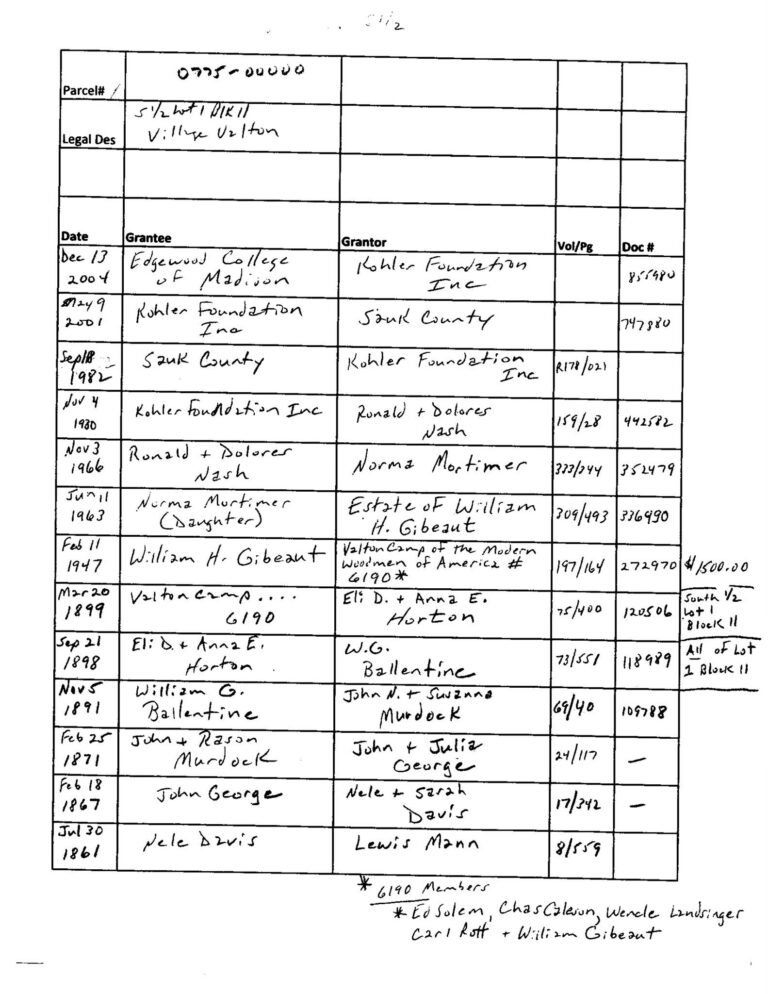
The Taxman Never Lies
Oral history is fascinating and useful and very fun and doesn’t always match the written history. That doesn’t make oral history incorrect or invalid any more than it makes the written history incorrect or invalid; it makes all history nuanced.
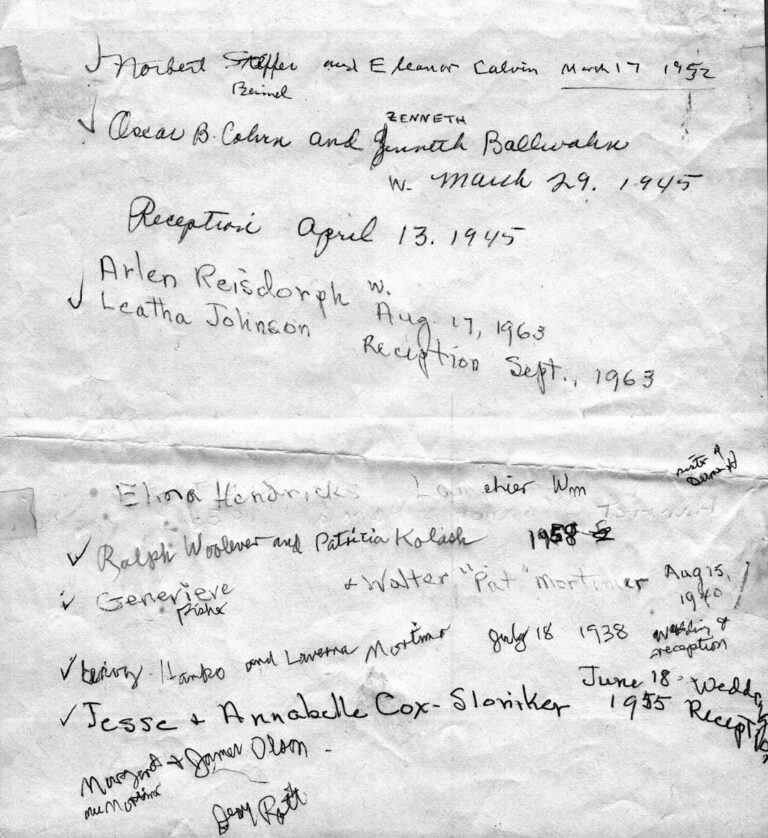
Abandoned (Not) by All
One of the greatest dangers to folk art is vandalism — but neglect is what invites it. After Modern Woodmen activities ended and Camp 6190 was deactivated in 1929, the building now known as Wood Hall passed down the Gibeault family tree.
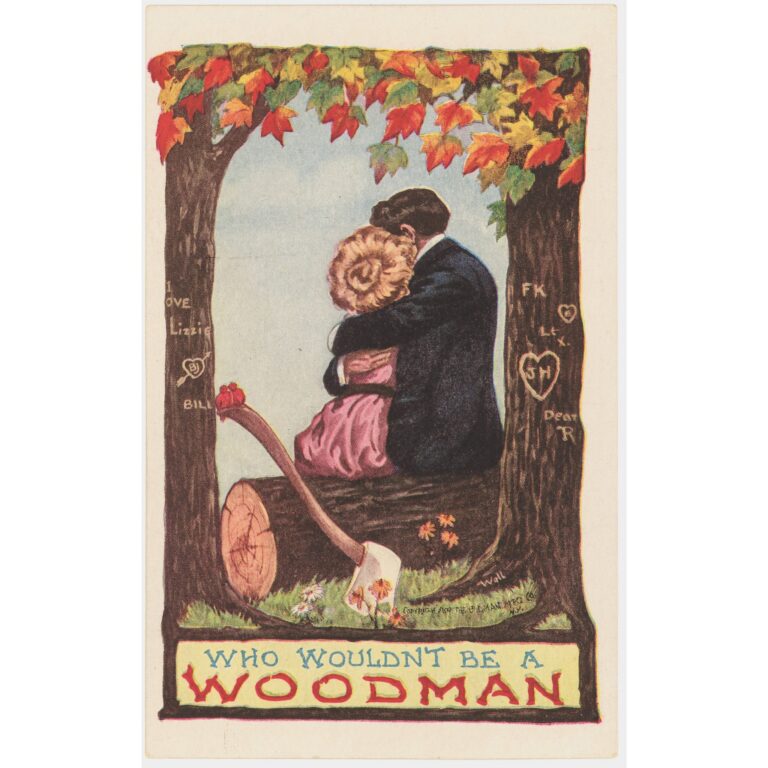
Who Wouldn’t Be a Woodman?
This early 20th-century postcard asks, “Who Wouldn’t Be a Woodman?” Images like this spoke to the heart, promising security, love, and protection for rural families.
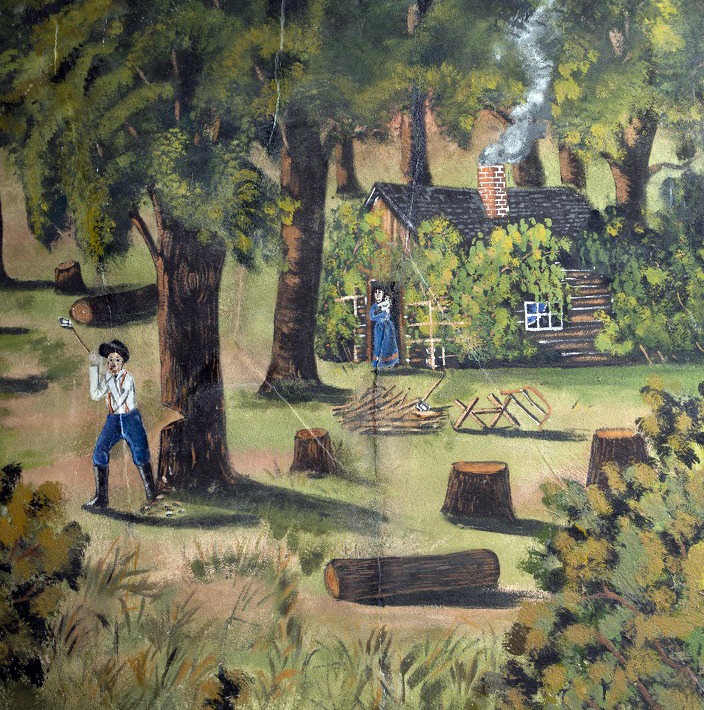
The Hidden Story in the Painted Forest Cabin Scene
It’s a small detail, but it tells us a great deal about how Ernest Hüpeden worked.
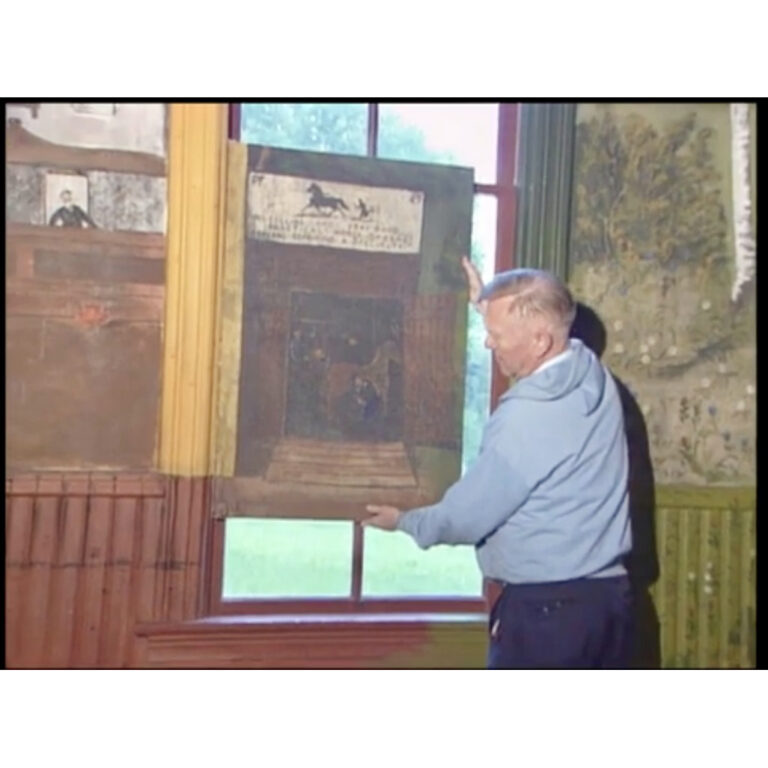
Window Murals
After completing the dramatic Battle of Manila curtain—an advertisement for the Modern Woodmen of America itself—Hüpeden did turn to the more typical lodge commission: local business advertising but he put them on the window shades.
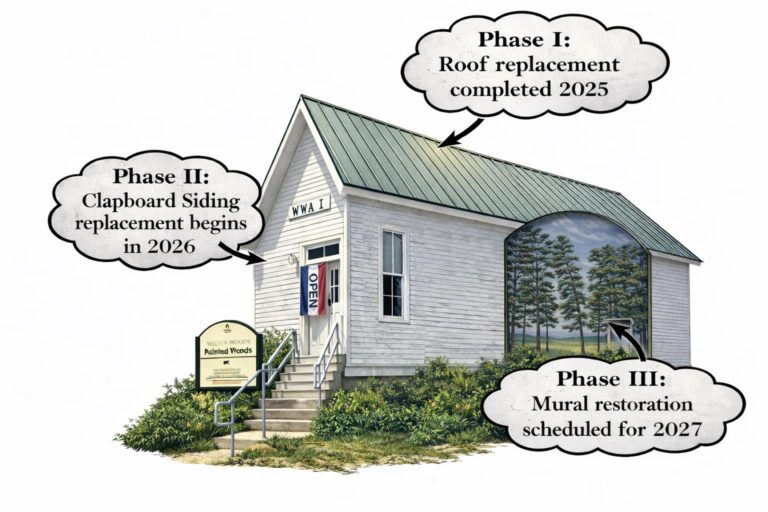
Restoration Underway
We got it going on!! Our three phase restoration project is underway under the careful direction of David Wells.
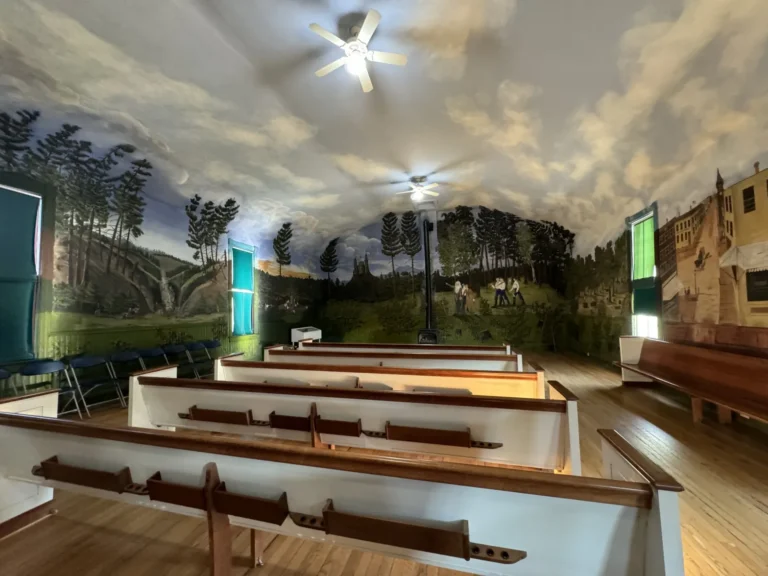
Ernest Hüpeden’s Murals
At the turn of the twentieth century, German immigrant artist Ernest Hüpeden quietly gave Valton’s MWA Camp 6190 Hall its lasting visual identity—though it wouldn’t be called the Painted Forest for another 60 years, when Delores Nash gave it the name we still use today.
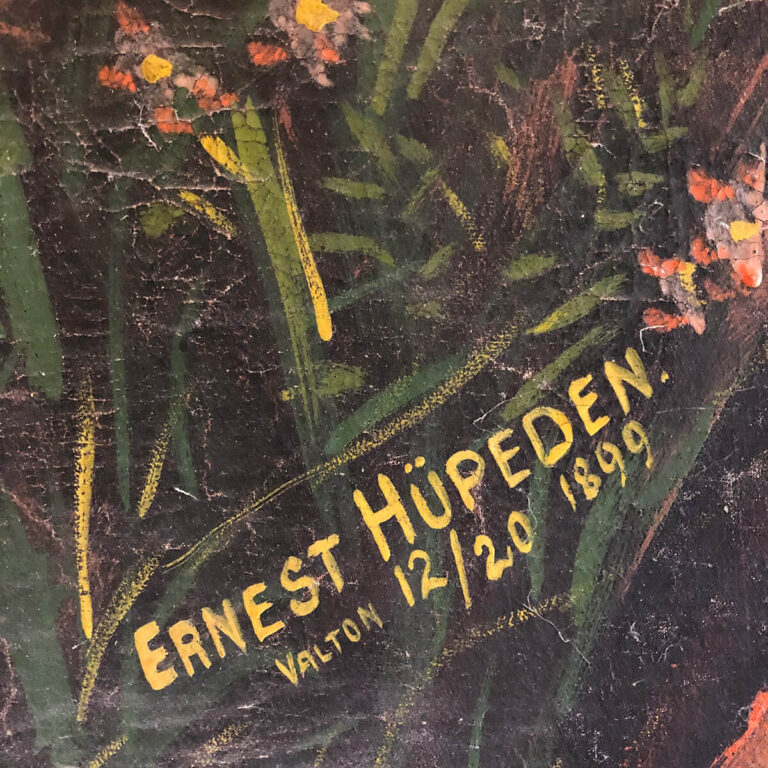
Curtain Wall
Fun Fact: Cabin Wall Let’s go inside! Beyond their similar exteriors, Modern Woodmen of America (MWA) camp lodges also shared interior layouts with a stage at one end of the building. The stage curtains were used as advertising space for local
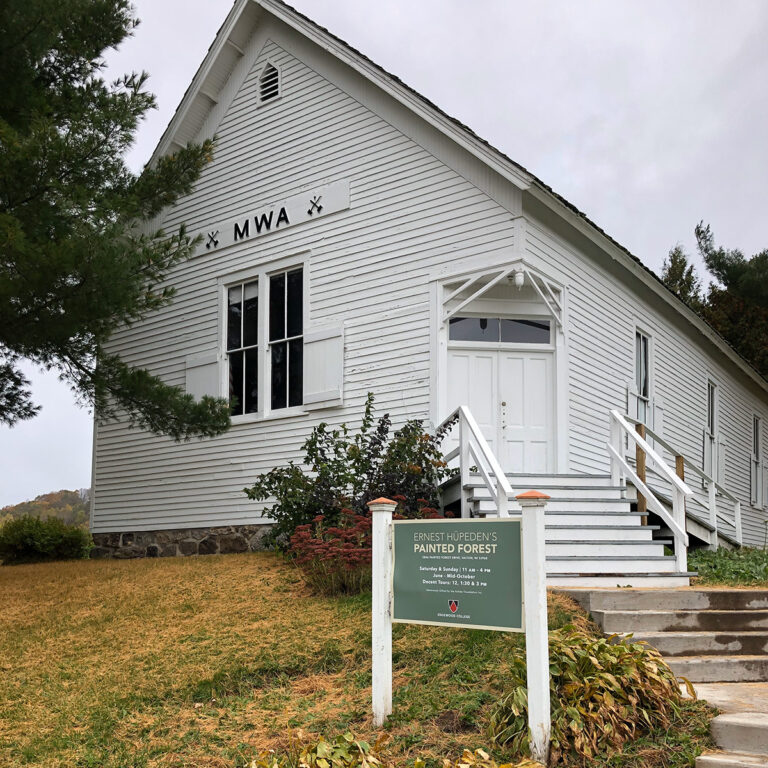
Modern Woodmen of America Lodge Halls Across Wisconsin
Modern Woodmen of America Lodge Halls Across Wisconsin Many Modern Woodmen of America lodge halls across Wisconsin and the Midwest look like cousins. Most were simple, boxy buildings with similar fronts and layouts. That wasn’t an accident — local camps
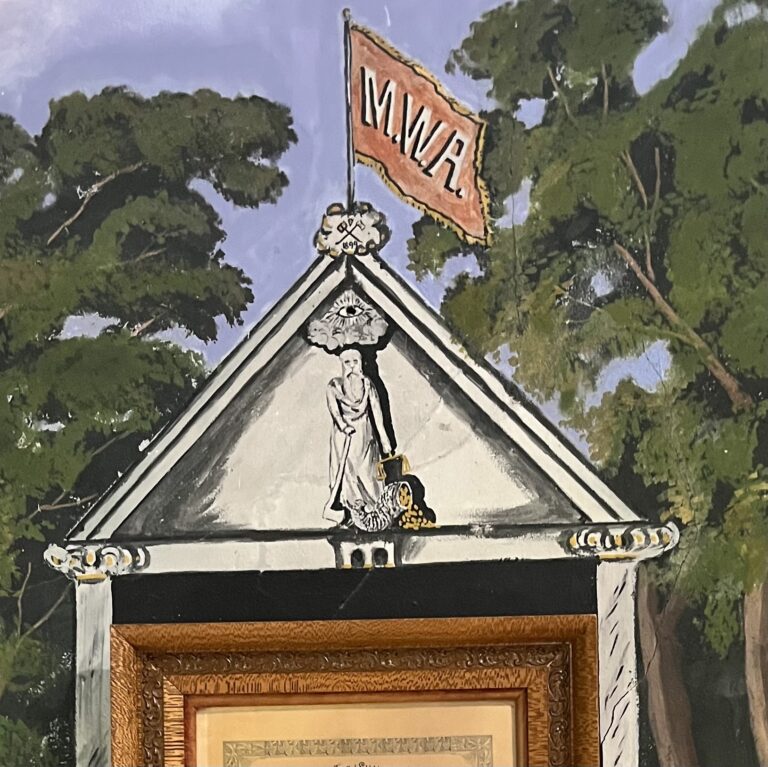
All-Seeing Eye
The very first Modern Woodmen of America Fraternity was chartered in 1883 in Lyons, Iowa. The Valton camp, chartered in 1899, is Camp 6190 – an attestation to the rapid growth of the organization.