
WAITING FOR GOETHE: AN HISTORICAL TANGENT

We aren’t the first people to make this pun. There is an academic chapter titled Waiting for Goethe. Same pun, different story.
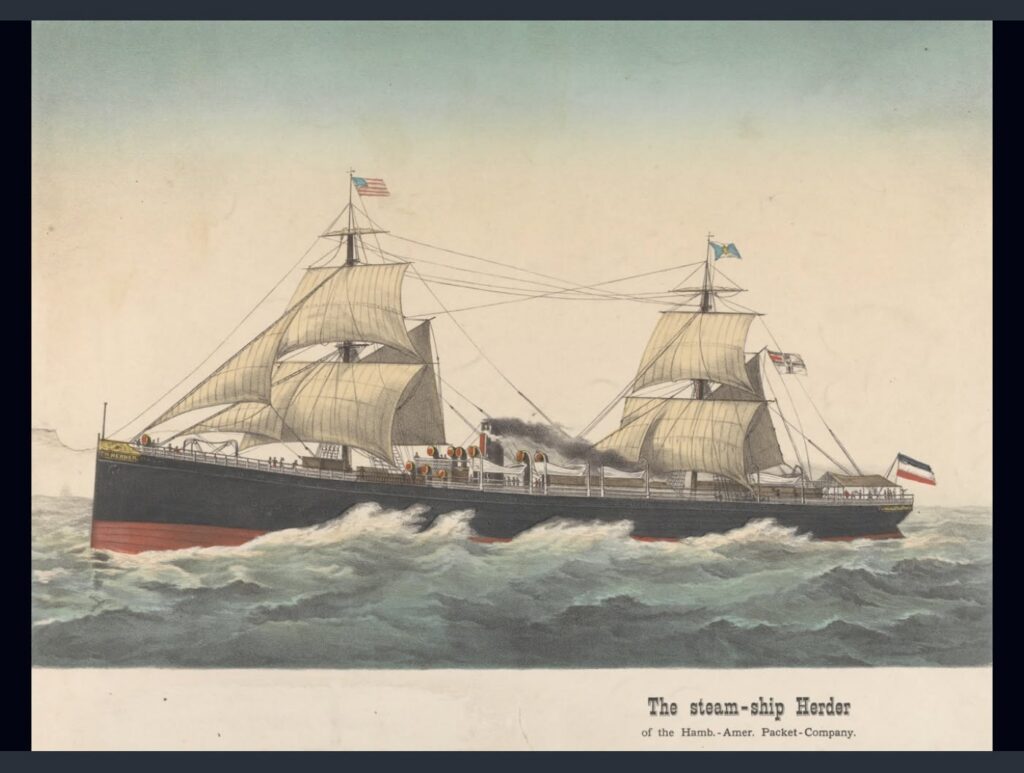
On February 19, 1874, the steamship Herder left Cuxhaven, Germany, bound for New York. She did not make it. On March 3, the Herder put into Queenstown, Ireland – today Cobh – damaged. Lloyd’s List described her condition in wonderfully blunt maritime language: “leaky, and with loss of boats.”
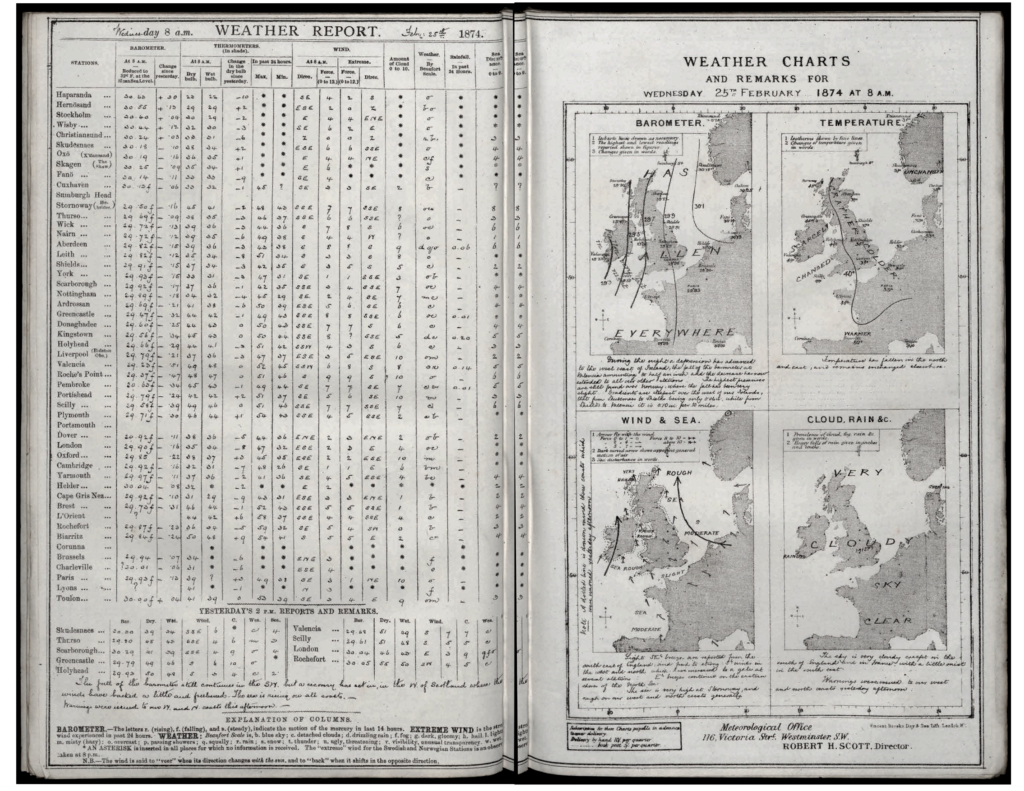
The British Meteorological Office’s daily reports tell us a powerful Atlantic weather system developed on February 25 – the pressure plunged and gale-force southerly and southeasterly winds swept the western approaches. On February 26, the storm reached its violent peak, with exceptionally strong gales and very rough seas recorded around Britain and Ireland.
Wouldn’t you have loved to be on that boat in the middle of the ocean?
Herder’s passengers had left Germany on February 19, 1974. After the damaged ship reached Queenstown on March 3, they remained there until March 9, when another Adler Line steamship arrived to carry them on to New York. They finally arrived in New York on March 18, 1874. What should have been roughly a 12-day Atlantic crossing had stretched into a 27-day journey.
And the name of the ship they were waiting for?
Goethe.
They were waiting for Goethe.
Which is already pretty wonderful. But it gets better.
This is not just any ship in our research. Four years later, on October 2, 1878, Ernest Hüpeden left Hamburg aboard this same steamship, Herder, beginning his journey to America. He arrived in New York on October 18.
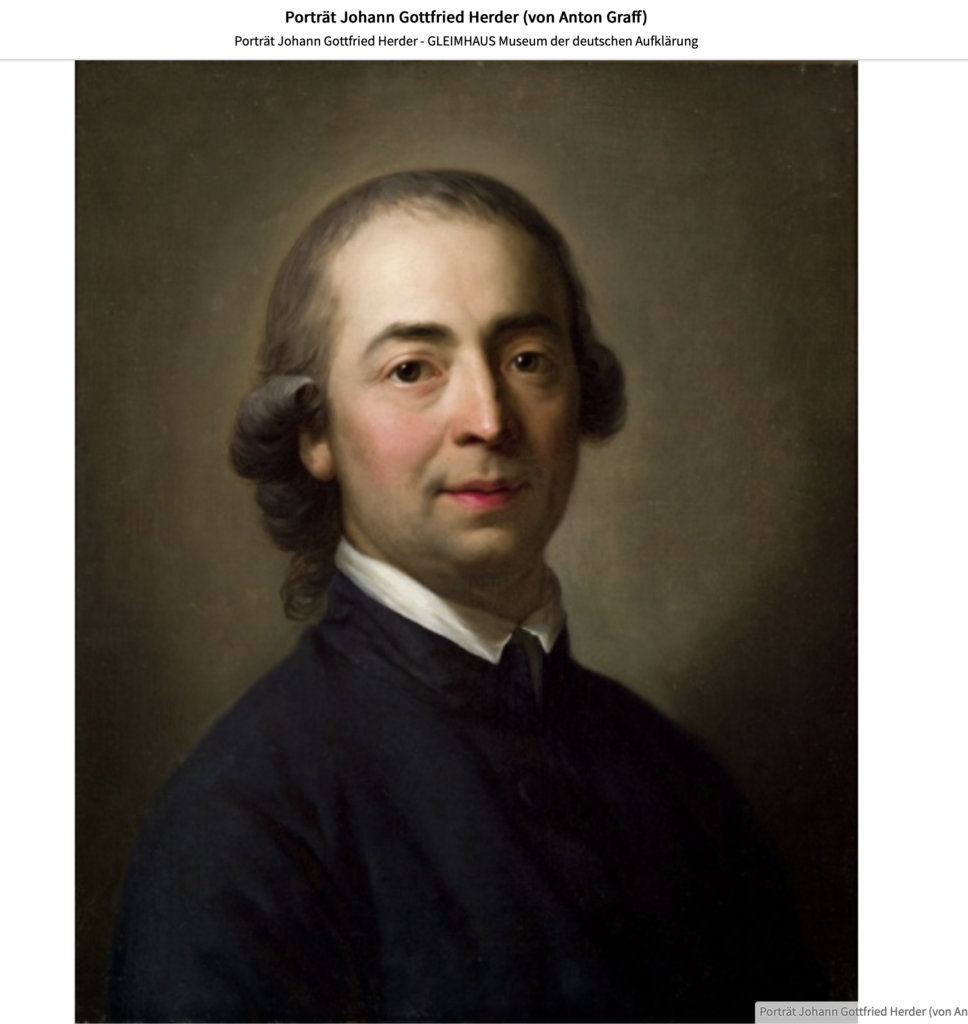
The steamship Herder was named for Johann Gottfried Herder (1744–1803), philosopher, theologian, critic, writer, and one of the great intellectual figures of 18th-century Germany.
Johann Herder had a memorable relationship with ships. In 1769, at age 24, he left Riga – today the capital of Latvia, then part of the Russian Empire – by sea. Dissatisfied with the confined life he had been leading as a teacher and clergyman, he set out without even being completely certain where he was going. After about six weeks at sea, he reached Nantes, France.
The voyage became an intellectual turning point for him. In his travel journal he wrote:
“Was gibt ein Schiff, das zwischen Himmel und Meer schwebt, nicht für weite Sphäre zu denken! Und so ward ich Philosoph auf dem Schiffe – Philosoph aber, der es noch schlecht gelernt hatte, ohne Bücher und Instrumente aus der Natur zu philosophiren.”
“What a vast sphere for thought a ship, suspended between heaven and sea, provides! And so I became a philosopher on the ship – but a philosopher who had not yet properly learned how to philosophize from nature, without books and instruments.”
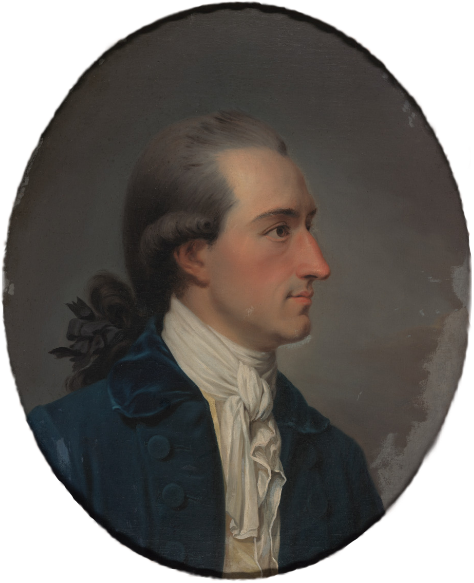
Then, in 1770, Johann Herder met a 21-year-old law student in Strasbourg named Johann Wolfgang Goethe. Herder had a lasting influence on the young Goethe, particularly on his thinking about Shakespeare, folk song, and poetry. Their names are permanently linked in German literary history.
Almost exactly a century later, those two names appeared together again – this time painted across the bows of enormous Atlantic steamships.
And in March 1874, the passengers of Herder found themselves in Queenstown waiting for another ship to carry them to America.
Herder waited for Goethe – sans metaphor, metaphysics, or existential angst.
We love the tangents of historical research. One minute we are tracing Ernest Hüpeden’s 1878 immigration. The next we are buried in Lloyd’s shipping reports, Victorian meteorological charts, Atlantic pressure systems, and Queenstown harbor records.
And that is half the fun.
Follow our Facebook page and subscribe to our email list for more of our research into Ernest Hüpeden, the Painted Forest – and the historical tangents we inevitably wander into along the way.
Links:
1. Waiting on Godot: https://link.amazon/B0iNvZ6ej
2. Photo of oil Painting: Anton Graff (1736-1813), Portrait of Johann Gottried Herder https://nat.museum-digital.de/object/917
3. Photo of oil Painting: Georg Oswald May, Portrait of Johann Wolfgang von Goeth (1749-1832 in 1779) https://commons.wikimedia.org/…/File%3AJohann_Wolfgang…
4. Under Full Sail SS Herder Pic – The steam-ship Herder of the Hamb.-Amer. Packet Company Hand-coloured 1873: https://www.rmg.co.uk/collections/objects/rmgc-object-140307
5. Meteorological Office, Daily Weather Reports, 27 February 1874, pp. 60–61. London: Meteorological Office, 1874.

Written by Lisa Buttonow
Multi-disciplinary writer Lisa Buttonow brings a love of history and hidden stories to Ernest Hüpeden’s Painted Forest. Her diverse background includes degrees from Cornell University and UW-Madison, after which she opened her own locally focused restaurant, Branding Iron Roadhouse, and founded the Hill & Valley Exploration Tour. Across all of her pursuits, Lisa explores the intersection of art, history, food, and the character of rural places.