
What's hiding in Ernest Hüpeden's Painted Forest?
Wisconsin’s forests have never been inhabited by ordinary creatures alone. At least not according to the lumberjacks.
There was the Hugag, whose legs had no joints, so it had to sleep leaning against trees. The Agropelter hid in hollow trees and hurled branches at passing lumbermen. The Splinter Cat smashed headfirst into trees looking for raccoons and honey. And the miserable Squonk was said to be so ashamed of its appearance that it wandered the woods crying and could dissolve completely into tears when cornered.
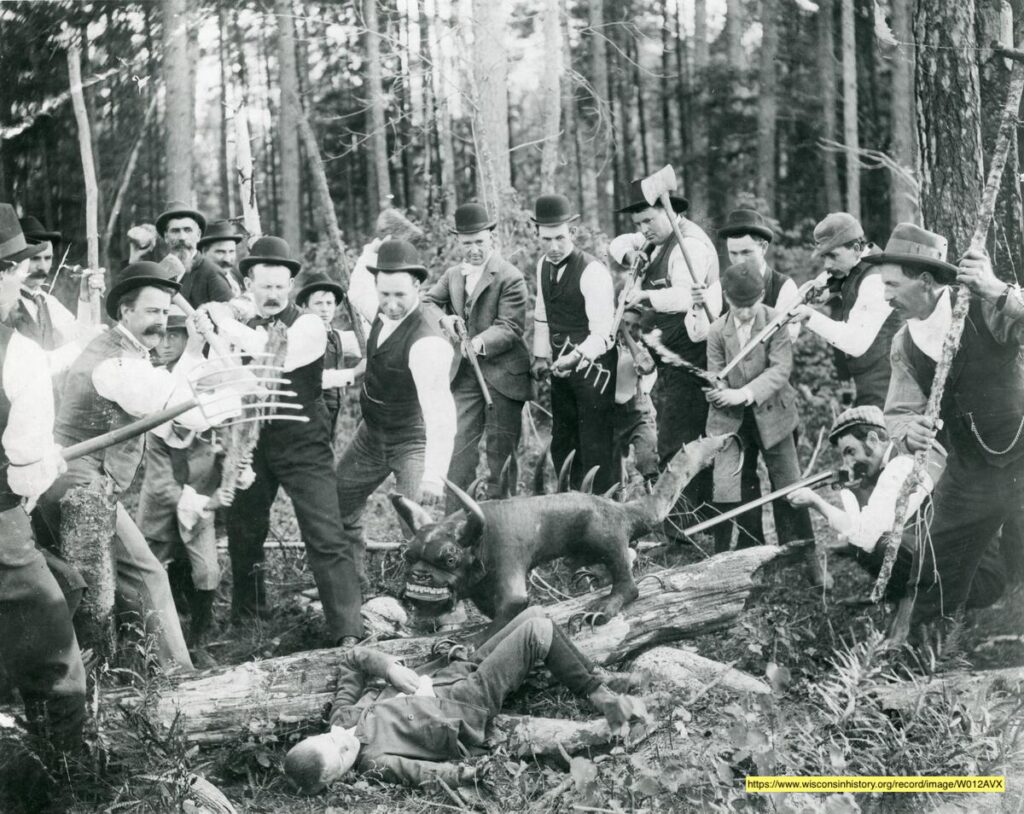
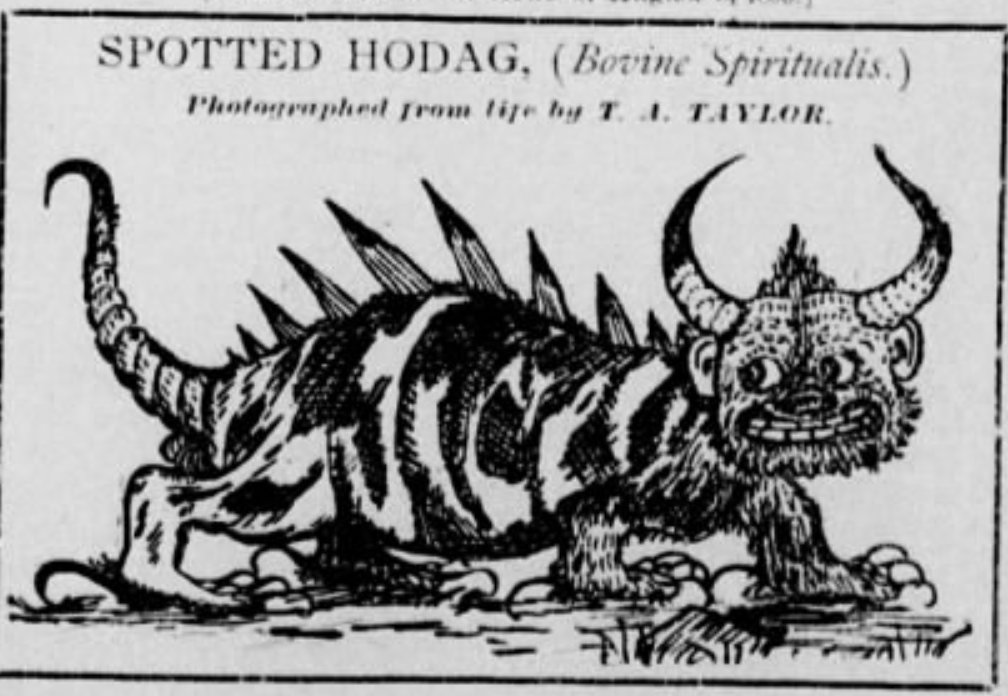
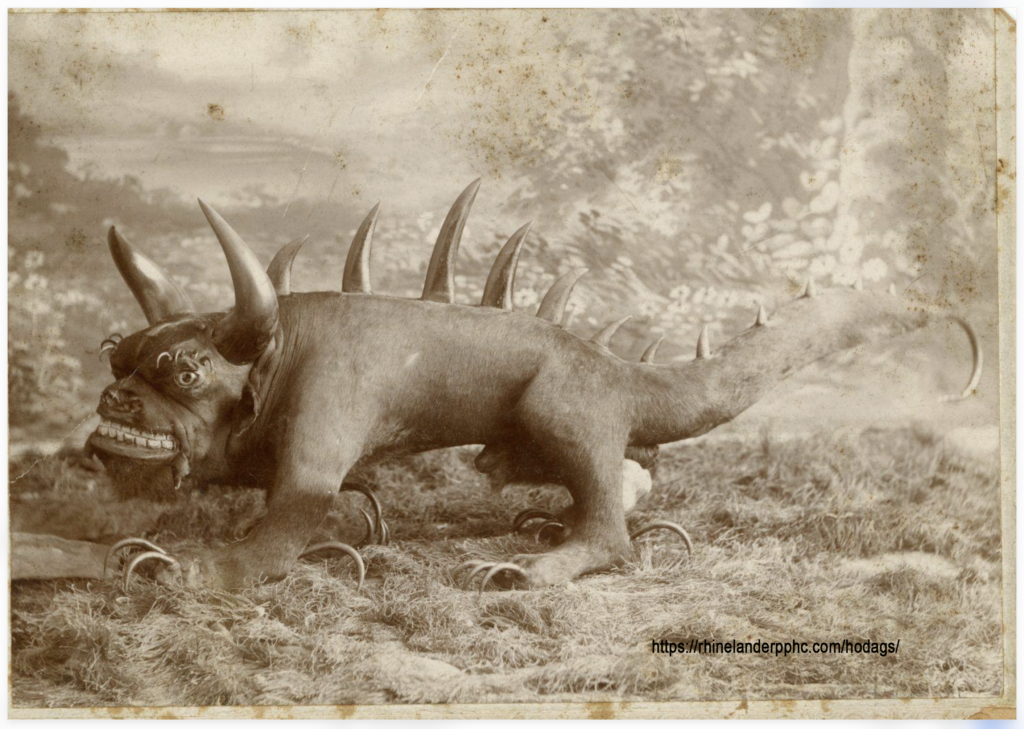
And then there was Wisconsin’s most famous monster of all: The Hodag.
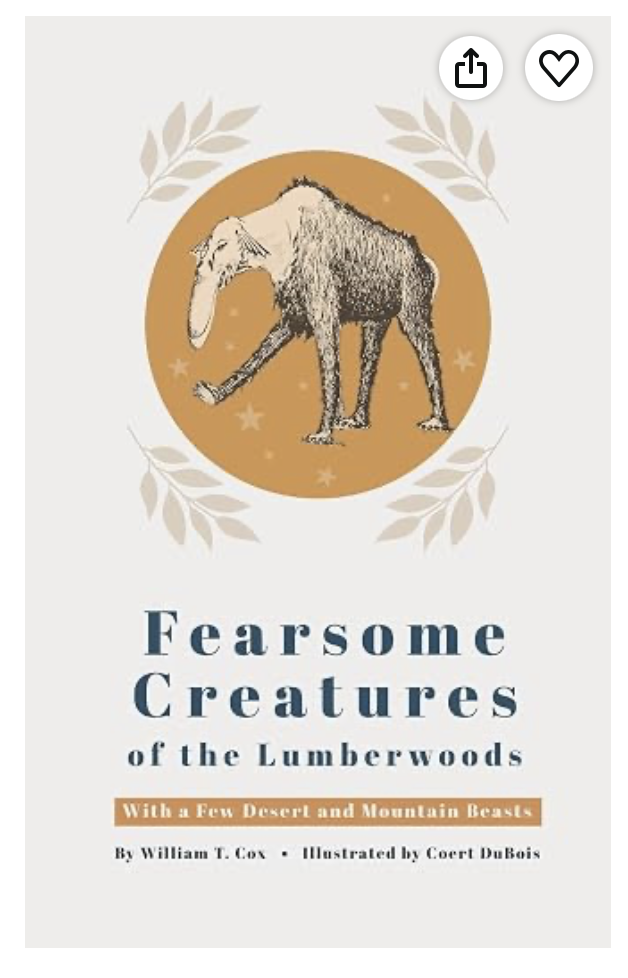
The Hodag was already prowling through northern Wisconsin folklore by the 1890s, when Rhinelander timber cruiser Eugene Shepard helped turn the creature into a sensation. By 1910, William T. Cox included the Hodag among the strange beasts in his wonderfully titled Fearsome Creatures of the Lumberwoods, preserving stories that had been invented, embellished and passed from one logging camp to another.
Ernest Hüpeden wandered Wisconsin in the late 1800s and early 1900s. We know he wandered into its lumber world of logging camps, sawmills, lumberyards and railroad spurs. We wonder if he ever saw a Hodag along the way.
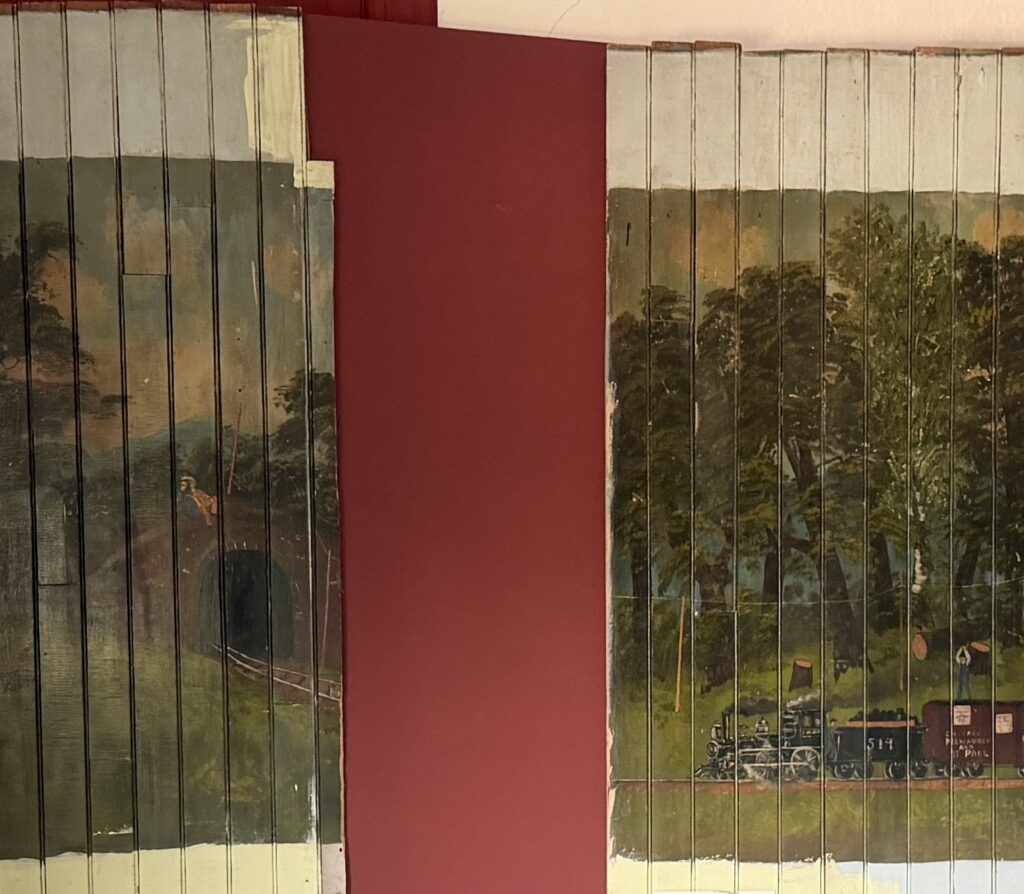
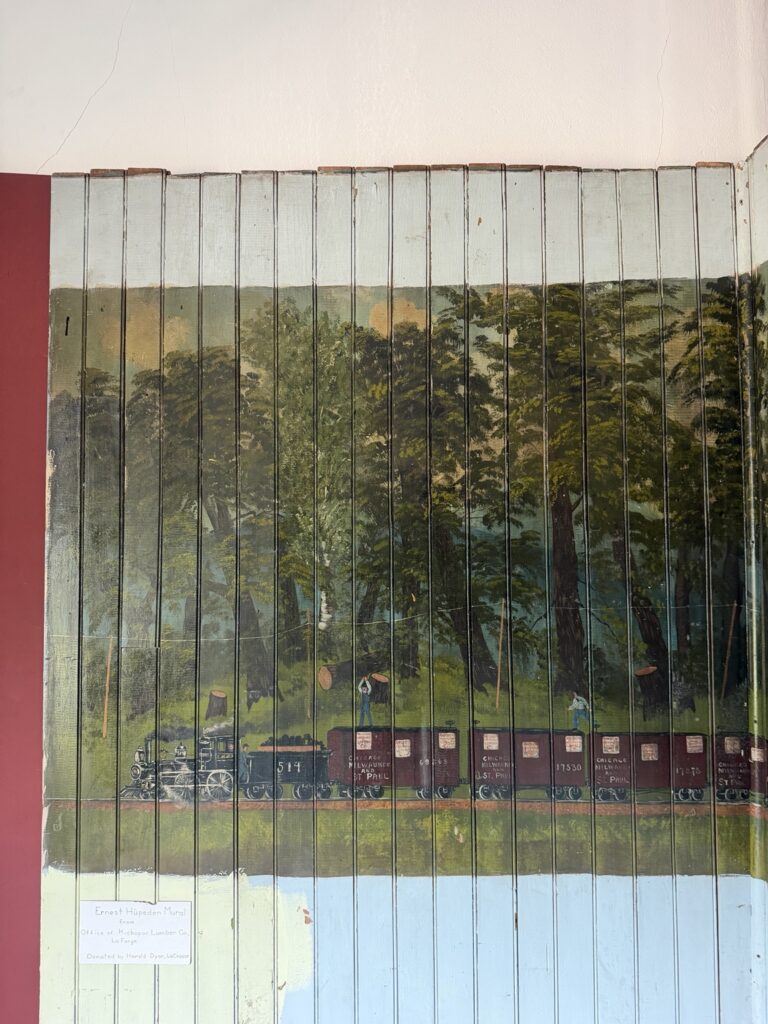
In the antechamber of Ernest Hupeden’s Painted Forest is a secondary Hüpeden mural that once covered the walls of the Kickapoo Hardwood Lumber Company office in La Farge. Around 1908, lumberman August Kriegel hired Hüpeden to paint the office, later associated with the American Hardwood Lumber Company. Ernest painted directly onto the tongue-and-groove wall boards, creating a broad landscape of forested hills, cut timber, tree stumps, a railroad tunnel and a steam locomotive, No. 514, pulling its train through the woods. The railroad, the timber, the stumps, the lumber companies, the forest stretching into the distance – this was Wisconsin in 1908. Hüpeden painted the trees, trains and timber. The lumbermen supplied the monsters.
At some point a doorway was cut through Hüpeden’s lumber office mural. Part of the panel bearing his signature was cut away and discarded to make room for the door (though a portion of his signature remains), and an opening was made for a chimney. Just like Ernest Hupeden’s Painted Forest itself, this second mural survived through the remarkable care and appreciation of Ernest Hupeden’s work.
Bert Dyar purchased the lumberyard from August Kriegel and converted the former lumber-company office into the Dyar family residence. He carefully removed the painted tongue-and-groove boards one at a time, numbered them on the back so the mural could someday be reassembled, and then stored them for years. Harold and Ruth Dyar of La Crosse eventually donated the mural, allowing this second body of Hüpeden’s Wisconsin work to survive.
Today it has been reassembled at the Ernest Hupeden’s Painted Forest, where visitors can once again see No. 514 steaming through Ernest Hüpeden’s Painted Forest.
Ernest gave us one version of Wisconsin: railroads, timber, landscape and industry. The lumberjacks gave us another: Hodags, Squonks, Agropelters and things best avoided after dark.
Next time you stand in front of Hüpeden’s La Farge mural, look beyond No. 514. Look around the tunnel. Look behind the trees. We have not found a Hodag anywhere in Ernest Hüpeden’s paintings. Yet. But while you’re looking, keep an eye out for something we have found: the surviving fragment of Hüpeden’s own signature, still painted on the edge of the mural after all these years.
Fearsome Creatures of the Lumberwoods by William Cox https://link.amazon/B05lYhGml
Fearsome Creatures of the Lumberwoods, With a Few Desert and Mountain Beasts by William Cox https://link.amazon/B0i1Adndk
If you enjoy the strange, beautiful, unexpected stories, please share the Ernest Hüpeden’s Painted Forest page with someone you love who might enjoy wandering these woods with us.
Every share helps introduce another person to Hüpeden’s art, the history of Valton, and all the curious stories still waiting to be found among the trees.

Written by Lisa Buttonow
Multi-disciplinary writer Lisa Buttonow brings a love of history and hidden stories to Ernest Hüpeden’s Painted Forest. Her diverse background includes degrees from Cornell University and UW-Madison, after which she opened her own locally focused restaurant, Branding Iron Roadhouse, and founded the Hill & Valley Exploration Tour. Across all of her pursuits, Lisa explores the intersection of art, history, food, and the character of rural places.