
The Goat Story — From “Secret Society” Fear to Fraternal Fun
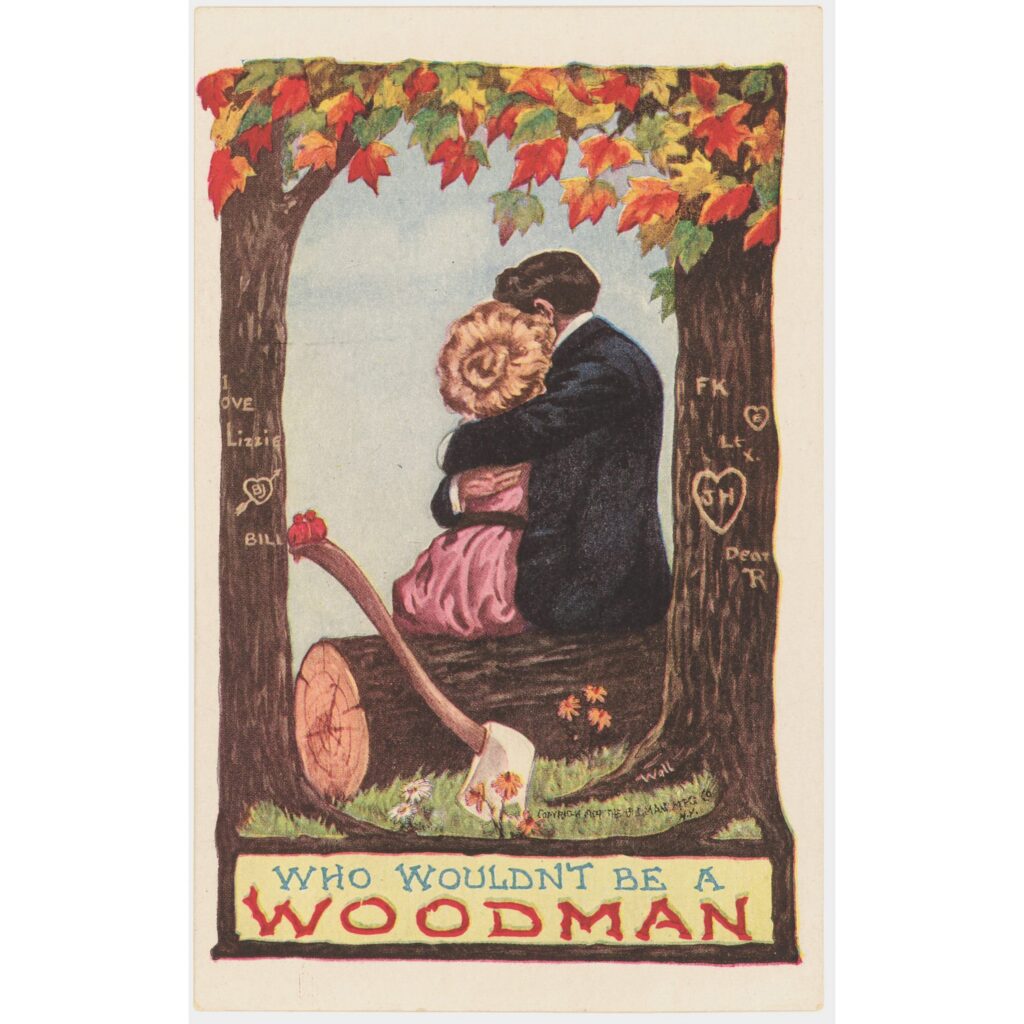
This early 20th-century postcard asks, “Who Wouldn’t Be a Woodman?” Images like this spoke to the heart, promising security, love, and protection for rural families.
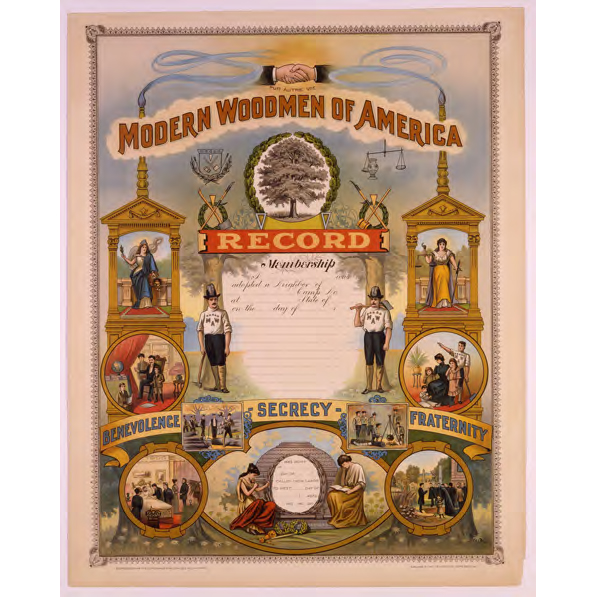
The membership certificate represents the formal side of that promise, placing each member within a system of mutual aid built on benevolence, secrecy, and fraternity. For many, MWA membership meant community—and the assurance that someone would care for those left behind.
In 1928, after 29 years of serving Valton and the surrounding countryside, Camp 6190 deactivated as farm communities were already facing falling prices and economic strain. Just one year later, the stock market crash marked the beginning of the Great Depression and accelerated the decline of fraternal life across Wisconsin.
The fraternity dissolved, but the building endured—along with the remarkable murals painted by itinerant German immigrant artist Ernest Hüpeden. His work transformed the hall into a lasting record of what membership once meant: protection, community, and mutual care.
Together, these images reveal both the emotional appeal and the practical structure of fraternal life—an essential part of everyday rural experience at the turn of the century—and the enduring value of Hüpeden’s folk art.
Tagged blog